080-26603192
apscollegeartsandscience@gmail.com
AISHE Code: C-20853
Visitors: 1,072
ADMISSION OPEN 2026-27
APS Logo
Re-Accredited by NAAC with B+ Grade
APS Educational Trust (Estd. 1935)
APS College of Arts and Science
N.R. Colony, Basavanagudi, Bengaluru – 560004
Affiliated to Dr. Manmohan Singh Bengaluru City University
AICTE Approved
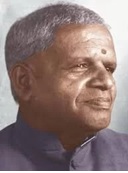
Founder
Late Prof. N. Ananthachar
Founder
Program & Course Outcomes | APS College

Outcomes Based Education (OBE) Framework & Academic Calendar

Program & Course Outcomes

Detailed outcomes for all semesters as per BCU SEP/NEP 2024-25 Curriculum.

Program Outcomes (PO)

PO #Description
PO1Computational Knowledge: Apply knowledge of computing fundamentals and AI specializations.
PO2Problem Analysis: Identify and analyze complex problems using AI & ML principles.
PO3Design/Development: Design solutions for AI-driven applications considering public health and safety.
PO4Modern Tool Usage: Create and apply appropriate techniques using modern AI tools (Python, TensorFlow).

Course Outcomes (Sem 1 - 6)

Discrete Structure: Apply Set theory, Relations, Functions and Mathematical Induction.
Problem Solving: Understand algorithmic strategies and C programming.
Computer Architecture: Analyze the basics of computer organization and digital logic.
Data Structure: Understand arrays, stacks, queues, and linked lists.
  • Artificial Intelligence (24BCA33): Understand fundamental AI concepts, heuristic search, and knowledge representation.
  • Database Management System (24BCA31): Design conceptual data models using ER diagrams and SQL.
  • Probability & Statistics (24BCA32): Apply statistical methods for data analysis in ML.
  • Computer Networks (24BCA41): Understand OSI/TCP-IP models and network protocols.
  • Design & Analysis of Algorithms (24BCA42): Analyze time/space complexity of algorithms.
  • Feature Engineering: Techniques to extract features from raw data for ML models.
  • ML & Neural Networks (24BCA51): Understand neural network architectures and backpropagation.
  • Digital Image Processing (24BCA52): Apply image enhancement and restoration techniques.
  • Natural Language Processing (24BCA53): Process and analyze large amounts of natural language data.
  • Deep Learning for Computer Vision (24BCA61): CNNs, Object Detection, and Image Segmentation.
  • Predictive Analysis (24BCA62): Forecasting trends using statistical algorithms and machine learning.
  • Project Work: Develop a real-world AI/ML application.

Program Outcomes (BCA - Regular)

PO #Description
PO1Full Stack Proficiency: Master frontend and backend technologies for web development.
PO3Software Engineering: Apply software development life cycle (SDLC) principles.
PO5Modern Tool Usage: Use IDEs, version control (Git), and cloud platforms effectively.

Course Outcomes (Sem 1 - 6)

  • Database Management System (24BCA31): SQL, Normalization, and Transaction Management.
  • Probability and Statistics: Statistical analysis for data science.
  • Artificial Intelligence (24BCA33): Basics of AI and search algorithms.
  • Computer Networks (24BCA41): Network layers, IP addressing, and routing.
  • Software Engineering (24BCA43): Requirement analysis, design patterns, and testing.
  • Web Programming-II (Elective): Advanced web technologies.
  • Frontend Design (24BCA51): React/Angular, UI/UX principles.
  • Backend Development (24BCA52): Node.js, Express, API development.
  • Cloud Computing (24BCA53): AWS/Azure services, deployment, and scalability.
  • Software Project Management (24BCA61): Agile methodologies, project planning.
  • Mobile Application Development (24BCA62): Android/iOS app creation.
  • Project Work: Full stack application development project.

Course Outcomes (History)

Familiarize with Harappan Civilization, Vedic Culture, Mauryas, and Guptas.
Delhi Sultanate, Mughal Empire, and Bhakti Movement.
Colonial settlements, Uprisings up to 1857, and Social Reformers.
Growth of Indian Nationalism, Gandhian Era, and Partition of India.
History of Western Civilization, Colonialism in Asia, Contemporary India (1947-1990s), and History of Tourism.

Course Outcomes (Physics)

Understand laws of motion, elasticity, gravitation, and special theory of relativity.
Electrostatics, magnetostatics, electromagnetic induction, and Maxwell's equations.
Laws of thermodynamics, entropy, kinetic theory of gases, and statistical mechanics.
Superposition of waves, interference, diffraction, and polarization of light.
Classical Mechanics, Quantum Mechanics, Nuclear Physics, and Solid State Physics.

Course Outcomes (M.A Economics)

Micro Economics, Macro Economics, Public Economic Theory, Mathematical Methods for Economists.
Monetary Economics, Development Economics, Econometrics, and Indian Economic Policy.
Public Economics, Economics of GST, International Economics, and Research Methodology.

Calendar of Events

Academic Calendars and Notifications